I spent part of yesterday listening to the BBC Radio 4 programme In Our Time that was devoted to discussing the relationship between "continental" and analytical philosophy and thought it was worth offering some comments on it. The show, chaired as always by Lord Melvyn Bragg, has a number of problems generally since it forces into 45 minutes discussions that are hardly fitted to such a compressed format. On the panel were Stephen Mulhall (best known for his work on Wittgenstein), Hans Glock (who has worked on the nature of analytic philosophy) and Beatrice Han-Pile (best known for her work on Foucault).
The basic problem at the heart of the show concerned the inability of the guests to really deal with "Continental philosophy", perhaps because, as was indicated more than once, it is less a philosophical category than a get-out clause that has been used often by Anglo-American thinkers to describe whatever it is that they don't do themselves. However, somewhat parallel to this, and less investigated than it should have been, is the demise of traditional "analytic" philosophy. Mulhall, who had the opening shot on the show, described the arrival of "analytic" philosophy at the beginning of the twentieth century, through the work of Bertrand Russell and Ludwig Wittgenstein (though he oddly neglected to refer to G.E. Moore). Subsequently, and perhaps because it has been popularly heard of, came the "logical positivists" after which it became somewhat unclear how the "analytic" tradition developed or what it is now. Glock did indicate at one point the view that the distinctive character of "analytic philosophy" was being increasingly lost though he didn't say either why this was so or what it meant for it to be the case.
The general point that the demise of the early twentieth century belief that philosophy had a sound logical method that could sweep all before it (oddly later revived in terms of a turn to language in ordinary language philosophy) meant that Anglo-American philosophers essentially had to return to the grand themes of philosophy (as noted in the general revival now of "metaphysics") went missing. However, without some understanding of the way in which the early mission of analytic philosophy was dissipated it becomes hard to understand either how it got cut off from "Continental philosophy" or the ways in which it is now re-engaging with the latter. The conventional argument that the analytic tradition began in revolt against idealism tells us little about how it is that idealism can now be found throughout Anglo-American philosophy all over again (and not just because of the influence of the Pittsburg school).
Similarly, the "Continental" tradition was presented by Han-Pile in terms of a concern with existential questions and a concentration on hermeneutic approaches. This emphasis naturally leaves aside the origins of phenomenology or the emphasis on rigid mathematical thought in the contemporary work of Badiou. In presenting "Continental" thought through the prism of existential questions something is caught about the use of literary methods but this again is something also important for such an evident Anglo-American thinker as Martha Nussbaum.
The generic reflections attempted focused on the way in which the Idealist response to Kant marked a rupture of sorts that was not followed in Anglo-American thinking but runs into the inconvenient fact of the British Idealist school which precisely was concerned with a relation to the classic Idealists. What comes out of thinking through these questions is the immense difficulty of finding anything obvious to say about a division which clearly does matter institutionally and yet is very difficult to capture either historically or conceptually.
A different story I would tell would concern the way in which the formation of contemporary institutions arises from late nineteenth century developments. It was in the 1870s that we saw the arrival of philosophy journals and around this time we also have the Neo-Kantian school in Germany. The latter school devised many of the divisions in philosophy that became determinative for it in universities. Curricula that moved away from concentration on Greek philosophy and looked instead to modern philosophy finding its founding in the work of Descartes is a product of historical and conceptual work during the 19th century and with it arrived the distinctions between logic, epistemology, ethics and the "lesser disciplines" that became central to the manner in which analytic philosophy was institutionally disseminated. The questions of pedagogy that both played into this and also gave it a particular impetus have rarely been studied.
By contrast, French and German universities underwent different processes of formation, processes that themselves would require study. However what remained important here was a constant historical reference in philosophy that prevented the response to philosophy as merely a set of "problems". America, by contrast to both the UK and to the French and German situations, took longer to arrive at a determinate sense of philosophy and when it did it owed a lot to the efforts of Wilfrid Sellars. Sellars, himself, unlike many British examples, looked always back to historical examples and the arrival of new forms of idealism in American philosophy refer back to his influence.
By contrast to these reflections, the general emphasis of the guests on In Our Time focused only on the "great" thinkers and on reactions to them. I think, however, the institutional ways in which thinkers become canonised and the selection of questions from them requires understanding by means of how divisions in a subject become seminal. This requires a different type of approach to the conventional but don't expect to see it soon!
Showing posts with label history of philosophy. Show all posts
Showing posts with label history of philosophy. Show all posts
Tuesday, 15 November 2011


Monday, 18 April 2011
Rawls' Hermeneutics
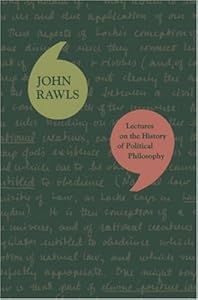
In a review article written for the European Journal of Political Theory Michael L. Frazer assesses Rawls' Lectures on the History of Political Philosophy. The centre of Frazer's review of Rawls' lectures concerns a tension that he discerns within Rawls' hermeneutics, a tension that has serious philosophical roots. The hermeneutics itself is guided, for Frazer, by two principles. On the one hand, Rawls is an advocate of interpretive charity, the view that one should, in interpreting a philosophical text, attribute the strongest view possible to the author one is reading, especially rejecting the notion that the author's text is inconsistent unless it is absolutely impossible to find any other alternative. Whilst Rawls' commitment to interpretive charity appears unusually strong from Frazer's account, it is far from an unusual view to uphold.
The second commitment is to interpretive humility, the view that the authors one is reading and interpreting are, in an important sense, wiser than oneself. When this principle is added to the first then one has specific reasons to work to try to find out the "genius" of the text one is interpreting in order to work out the basis of its significant contribution to the discipline one is engaged with.
Now if these are the principles of Rawls' hermeneutics in a general sense, Frazer contrasts them with a philosophical commitment that, in a sense, undercuts the hermeneutic principles (at least that of interpretive humility). This philosophical commitment is Rawls' modest conception of the role and import of political philosophy, political-philosophical humility, a humility that deflates the place of political philosophy viewing it as, at most, a part of the background conditions for public reason to be effective. However, to this general view of the role of political philosophy is also attached the specific way Rawls understands this modesty with regard to the place of political philosophy. The modesty is defined in terms of viewing political philosophy in the terms that emerged after the "Kantian constructivist" period when Rawls stressed the notion that political philosophy is "political, not metaphysical". This claim requires political philosophy to abstain from commitments with regard to profound existential questions of political life.
Now Frazer's general point is that if you hold, as Rawls did, to such a clear form of political-philosophical humility then you will often have trouble, when interpreting texts, in viewing them through the lenses of interpretive humility when you realise that these authors do not share your view of political-philosophical humility. This tension can be resolved in one of two possible ways. On the one hand, you can interpret the authors according to a notion of interpretive charity and include in your notion of interpretive charity the view that any reasonable author will implicitly or explicitly include in their approach a form of political-philosophical humility even if not one quite as specific as the view that political philosophy should be "political, not metaphysical". This resolution of the tension between interpretive humility and political-philosophical humility by means of interpretive charity has odd results however, implying as it does anachronistic views of the task of political philosophy. The other form of resolution would be to accept that the authors in question do not fit your model of political-philosophical humility but in that case you can no longer be committed to the notion of interpretive humility with regard to these authors given your conviction of the superiority of the approach of political-philosophical humility.
Frazer's review in raising these questions about Rawls' response to the history of philosophy has the important effect of posing a problem for those, like Rawls, who are committed to the view that the interpretation of the history of philosophy has to be, in the first instance, philosophical rather than historical. If one is committed to this view then the standards that one regards as philosophically apt will tend to have the possible effect of distortion of the texts in question. To view the interpretation of philosophical texts, by contrast, as including a commitment to finding the historical basis of the texts' positions as a matter of first priority need not imply that one is not also engaged in a philosophical task though it may lead one to understand the task of philosophy as something that cannot be assumed to fit a method most suitable or convenient to oneself.

The second commitment is to interpretive humility, the view that the authors one is reading and interpreting are, in an important sense, wiser than oneself. When this principle is added to the first then one has specific reasons to work to try to find out the "genius" of the text one is interpreting in order to work out the basis of its significant contribution to the discipline one is engaged with.
Now if these are the principles of Rawls' hermeneutics in a general sense, Frazer contrasts them with a philosophical commitment that, in a sense, undercuts the hermeneutic principles (at least that of interpretive humility). This philosophical commitment is Rawls' modest conception of the role and import of political philosophy, political-philosophical humility, a humility that deflates the place of political philosophy viewing it as, at most, a part of the background conditions for public reason to be effective. However, to this general view of the role of political philosophy is also attached the specific way Rawls understands this modesty with regard to the place of political philosophy. The modesty is defined in terms of viewing political philosophy in the terms that emerged after the "Kantian constructivist" period when Rawls stressed the notion that political philosophy is "political, not metaphysical". This claim requires political philosophy to abstain from commitments with regard to profound existential questions of political life.
Now Frazer's general point is that if you hold, as Rawls did, to such a clear form of political-philosophical humility then you will often have trouble, when interpreting texts, in viewing them through the lenses of interpretive humility when you realise that these authors do not share your view of political-philosophical humility. This tension can be resolved in one of two possible ways. On the one hand, you can interpret the authors according to a notion of interpretive charity and include in your notion of interpretive charity the view that any reasonable author will implicitly or explicitly include in their approach a form of political-philosophical humility even if not one quite as specific as the view that political philosophy should be "political, not metaphysical". This resolution of the tension between interpretive humility and political-philosophical humility by means of interpretive charity has odd results however, implying as it does anachronistic views of the task of political philosophy. The other form of resolution would be to accept that the authors in question do not fit your model of political-philosophical humility but in that case you can no longer be committed to the notion of interpretive humility with regard to these authors given your conviction of the superiority of the approach of political-philosophical humility.
Frazer's review in raising these questions about Rawls' response to the history of philosophy has the important effect of posing a problem for those, like Rawls, who are committed to the view that the interpretation of the history of philosophy has to be, in the first instance, philosophical rather than historical. If one is committed to this view then the standards that one regards as philosophically apt will tend to have the possible effect of distortion of the texts in question. To view the interpretation of philosophical texts, by contrast, as including a commitment to finding the historical basis of the texts' positions as a matter of first priority need not imply that one is not also engaged in a philosophical task though it may lead one to understand the task of philosophy as something that cannot be assumed to fit a method most suitable or convenient to oneself.
Subscribe to:
Comments (Atom)